

The relationship between detectives and criminals in crime fiction works because each character type defines the other. Detectives exist to solve puzzles, criminals create those puzzles, and the tension between hunter and hunted drives every great mystery. This dynamic taps into something fundamental: our fascination with justice, morality, and the minds of people who operate outside society’s boundaries.
What makes this pairing so endlessly compelling is the cat-and-mouse psychology at play. The best crime fiction treats both detective and criminal as fully realized characters, not cardboard heroes and villains. Think of Louise Penny’s Inspector Gamache facing off against murderers who emerge from the seemingly peaceful Three Pines community, or the morally ambiguous criminals in Linwood Barclay’s Toronto-set thrillers. These aren’t simple good-versus-evil stories. They’re explorations of motivation, consequence, and the thin line between order and chaos.
The detective-criminal dynamic has evolved considerably since the genre’s golden age. Modern crime writers understand that readers crave complexity. Criminals aren’t always masterminds in shadowy lairs. Sometimes they’re desperate, broken, or convinced they’re doing the right thing. Detectives aren’t always noble crusaders. They carry trauma, make mistakes, and occasionally bend the rules they’re sworn to uphold.
This evolution mirrors real-world crime stories that have captivated Canadians, from high-profile investigations to cold cases that took decades to solve. Fiction borrows from reality, and reality often proves stranger than anything writers could invent. Understanding how these character types work together unlocks what makes crime and mystery fiction so addictive.
The Psychology Behind the Chase: Why We Love Detective-Criminal Dynamics

There’s something undeniably magnetic about watching a sharp mind hunt another sharp mind. The detective-criminal dynamic taps into our love of puzzles and intellectual combat, transforming crime fiction into a high-stakes game where we get to play along. We’re not just passive observers; we’re participants in the deduction, racing the detective to connect dots while simultaneously fascinated by the criminal’s audacity and cunning.
This appeal runs deeper than simple entertainment. The cat-and-mouse chase satisfies our craving for order restored to chaos. When a detective pursues a criminal, we’re watching the embodiment of justice confront the violation of our social contract. It’s comforting, really. No matter how clever or ruthless the antagonist, we trust that intellect and persistence will eventually prevail. That narrative promise offers psychological reassurance in a world where real-life justice often feels frustratingly elusive.
But here’s where it gets interesting. We’re simultaneously drawn to the criminal’s perspective, the transgressive thrill of seeing someone break rules we’re bound by. The best crime fiction doesn’t just show us good versus evil; it forces us to understand why someone intelligent and capable chose the path they did. That moral complexity turns the chase into an exploration of human nature itself. What separates the detective from the criminal? Circumstances? One crucial decision? A different childhood?
The adversarial relationship also creates an intimacy between opponents that’s genuinely compelling. They study each other, anticipate moves, develop a strange respect or even obsession. In many series, the detective knows their nemesis better than they know their own family. This twisted bond mirrors our fascination with duality, the idea that our greatest enemy might also be the person who most truly sees us. When Clarice Starling sits across from Hannibal Lecter, they’re engaged in a psychological dance that’s as revealing as any friendship.
The chase, ultimately, is about us. Our capacity for both justice and vengeance, our curiosity about the darkness we resist, and our need to believe that reason can triumph over chaos.
Classic Archetypes: From Holmes and Moriarty to Modern Rivalries

The Intellectual Equals
The most thrilling detective-criminal pairings happen when neither side holds an obvious advantage. These intellectual equals transform crime fiction into a chess match where readers hold their breath waiting for the next move.
Sherlock Holmes and Professor Moriarty set the template. Moriarty isn’t just a criminal, he’s “the Napoleon of crime,” a mathematician who orchestrates schemes with the same analytical precision Holmes uses to solve them. Arthur Conan Doyle created an adversary who could genuinely threaten his seemingly invincible detective, giving us the Reichenbach Falls confrontation that readers still debate.
Thomas Harris took this dynamic into darker territory with Hannibal Lecter and Clarice Starling. Their relationship crackles with tension because Lecter recognizes Starling’s exceptional mind even as she hunts him. He respects her enough to help catch other killers, turning their interactions into psychological duels where information is currency and every conversation carries risk.
What makes these pairings work is mutual recognition. The detective and criminal see in each other a rare peer, someone who understands the game at their level. This creates an almost intimate rivalry. Holmes admits studying Moriarty gives him intellectual satisfaction no other case provides. Lecter’s fascination with Starling stems partly from finding someone who won’t condescend or underestimate him.
The stakes escalate because victory requires outsmarting someone just as clever as you are.
The Mirror Images
Some of the most psychologically unsettling detective-criminal pairings are those where perpetrator and investigator could have been the same person, if not for one critical fork in the road. These mirror-image dynamics force us to confront an uncomfortable truth: the line between hero and villain isn’t always drawn by capability or circumstance, but by choice.
Consider Louise Penny’s Inspector Gamache and his various adversaries throughout the Three Pines series. Many of Gamache’s most formidable opponents share his intelligence, his capacity for leadership, even his love of family. What separates them? The moment when ambition, fear, or pride overtook integrity. Penny makes us squirm precisely because we recognize that Gamache’s decency isn’t inevitable, it’s a daily decision.
The mirror-image pairing works brilliantly because it strips away superficial differences. Both detective and criminal might have experienced childhood trauma, loss, or betrayal. They may employ similar investigative methods or psychological insight. Some grew up in the same neighbourhood or survived the same war. What differs is how they metabolized that pain.
This dynamic also creates devastating dramatic irony. The detective hunting their mirror often recognizes patterns others miss because they understand the criminal’s logic from the inside. They know what drives someone to cross that line because they’ve felt the pull themselves. That recognition can manifest as obsession, the detective needs to catch this particular criminal to prove they made the right choice, that the path not taken was truly wrong.
Canadian author Maureen Jennings explores this territory in her Detective Murdoch series, where class background and life circumstances create surprising parallels between investigator and investigated. The best mirror-image stories don’t offer easy answers about nature versus nurture. They suggest something more troubling: we’re all capable of both justice and cruelty.
Building the Perfect Criminal: What Makes a Memorable Antagonist
A truly memorable criminal character does more than simply provide obstacles for the detective to overcome. The antagonist must feel like a living, breathing person with comprehensible drives and internal logic, even when their actions repel us. Expert crime writers understand that the criminal serves as both mirror and crucible for the protagonist, revealing character through conflict while raising questions about justice, morality, and the systems we build to enforce order.
The foundation of any compelling antagonist is motivation that extends beyond cartoonish evil. Readers need to understand why a character commits crimes, even if they can’t condone it. The best criminals believe they’re justified, whether pursuing revenge for a genuine wrong, protecting someone they love, or operating under a twisted moral code that makes internal sense. This doesn’t mean sympathizing with murder, but it creates the psychological complexity that distinguishes a character from a plot device.
Backstory plays a crucial role here, but it’s a delicate balance. Too much explanation risks excusing the inexcusable; too little leaves the character feeling arbitrary. The most effective approach weaves history into present action rather than dumping exposition. A criminal’s childhood trauma might inform their patterns without serving as justification, we understand the wound without accepting the violence it spawned.
What separates unforgettable antagonists from forgettable ones often comes down to these core elements:
- Clear motivation rooted in human psychology rather than abstract evil
- Relatable qualities or vulnerabilities that create uncomfortable recognition
- Formidable intelligence or skills that make them worthy adversaries
- Moral complexity that challenges binary thinking about good and evil
- Direct impact on the detective’s character development and worldview
The criminal must challenge assumptions held by both detective and reader. This works especially well in Nordic noir rivalry dynamics, where antagonists often expose institutional failures and societal rot that complicate simple notions of individual guilt.
Canadian crime writers like Giles Blunt have mastered this through criminals who emerge from recognizable communities, their crimes reflecting broader social failures. The antagonist becomes a symptom of systemic problems rather than an isolated monster, forcing detectives to confront uncomfortable truths about the world they’re defending.
The craft challenge lies in making criminals fascinating without glorifying their actions. Competence doesn’t equal heroism. A meticulously planned heist can showcase intelligence without endorsing theft. Charisma in an antagonist creates engagement but shouldn’t eclipse the harm they cause. The narrative must maintain ethical clarity even while exploring moral complexity, showing consequences, centering victims, and never losing sight of the human cost behind the intellectual puzzle.
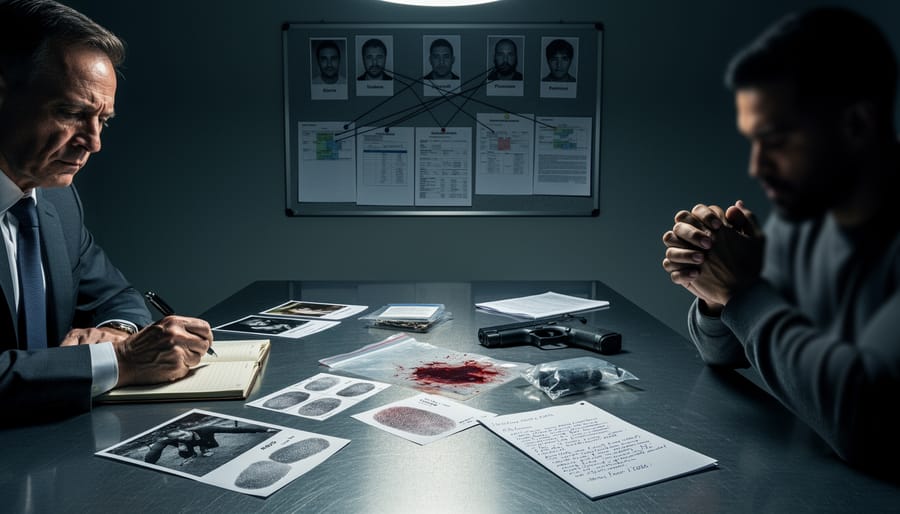
Crafting the Detective: The Other Half of the Equation
A detective isn’t built in isolation. They’re forged in opposition to the criminals they hunt, shaped by the adversaries who test their limits and exploit their weaknesses. The best crime writers understand this symbiotic relationship and use it to create protagonists who feel necessary rather than arbitrary.
Consider how a detective’s methods often mirror or counter their opponent’s approach. A calculating, patient criminal demands a detective who thinks three moves ahead. A chaotic, impulsive killer might face an investigator who thrives in disorder, turning unpredictability into an investigative asset. The criminal doesn’t just pose the puzzle; they define what kind of solver the story requires. When Gillian Flynn’s Amy Dunne manipulates media narratives in Gone Girl, her husband Nick must learn to play the same public relations game to survive, transforming from passive husband to strategic performer.
Flaws matter more than brilliance. A detective without vulnerabilities is a problem-solving machine, not a character. The criminals worth reading about target those specific weaknesses. They exploit the investigator’s impulsive anger, their desperate need to save everyone, their blind spot for people who remind them of lost loved ones. Louise Penny’s Inspector Gamache carries the weight of officers he’s lost, making him cautious where boldness might serve better, creating inner conflict that enriches every case.
The professional versus amateur divide shapes how detectives engage with their adversaries. Police detectives bring institutional resources but also bureaucratic constraints and jurisdictional headaches. Amateur sleuths, journalists, academics, concerned citizens, approach cases with fresh perspectives but lack authority and protection. Canadian detective series often feature investigators navigating vast geographical and cultural territories, where isolation becomes both obstacle and advantage. A small-town cop in northern Ontario operates differently than a Toronto homicide detective, and criminals adapt accordingly.
Regional identity runs deeper than setting. Maureen Jennings’ Detective Murdoch embodied turn-of-the-century Toronto’s tensions between old-world traditions and new-century progress. Giles Blunt’s John Cardinal wrestles with Algonquin Bay’s harsh winters and the particular vulnerabilities of northern communities. The hardboiled detective archetype transforms in Canadian hands, trading cynical urban decay for snow-bound pragmatism and the moral complexities of policing across cultural divides.
Your detective exists because this particular criminal requires them. Build backward from the antagonist to discover who can truly challenge them.
When the Lines Blur: Antiheroes and Morally Gray Territory

Modern crime fiction increasingly lives in the shadows between right and wrong, where detectives who break laws to catch criminals might be more dangerous than the people they hunt. The antihero detective, world-weary, rule-bending, sometimes barely distinguishable from their quarry, has become the genre’s most compelling protagonist precisely because they force us to ask uncomfortable questions about justice, morality, and the systems we trust to protect us.
Consider the cop who plants evidence to nail a suspect they “know” is guilty, or the private investigator who uses blackmail to extract confessions. These characters operate in moral quicksand. They get results, sure, but at what cost? Contemporary authors like Tana French and Louise Penny craft detectives whose personal demons and ethical compromises make them fascinatingly unreliable, blurring the line between hero and cautionary tale. The criminals they pursue often possess sympathetic backstories, abuse survivors turned violent, whistleblowers who crossed into criminality, parents protecting their children through illegal means. Suddenly, we’re rooting for the “wrong” person.
This moral ambiguity resonates in an era skeptical of institutions and traditional authority. Readers increasingly question whether the system delivers justice or merely preserves power. Even YA crime mysteries explore these themes, introducing younger readers to protagonists who must choose between legal and right when those paths diverge.
Canadian authors like William Deverell and John McFetridge excel at this morally complex territory, creating detectives who bend procedure while confronting criminals with legitimate grievances. The challenge for writers becomes maintaining reader engagement without endorsing vigilantism or nihilism. The best navigate this tightrope by making consequences real, every broken rule costs something, every moral compromise leaves scars. When the lines blur, great crime fiction doesn’t offer easy answers; it makes us complicit in the ambiguity.
Real-World Inspirations: True Crime Meets Fiction
Crime fiction’s most chilling villains and most dogged investigators often have roots in reality. The Pinkerton National Detective Agency, founded in 1850, became the blueprint for countless fictional detective organizations, their methods, successes, and controversies providing endless material for authors. Allan Pinkerton himself pursued notorious outlaws like Jesse James, creating a template for the relentless detective-criminal pursuit that still drives modern mysteries.
Real cases shape fiction in unexpected ways. The pursuit of Ted Bundy influenced Thomas Harris’s creation of Hannibal Lecter, while the Zodiac Killer’s taunting letters inspired countless fictional serial killers who communicate with investigators. Canadian writers have mined domestic cases too: the unsolved murders along the Highway of Tears, the Robert Pickton investigation, and wrongful convictions like David Milgaard’s provide powerful frameworks for exploring justice system failures and the human cost of criminal investigations.
But this inspiration comes with responsibility. Contemporary Canadian authors have increasingly grappled with the ethics of transforming tragedy into entertainment, particularly when victims’ families are still living with the aftermath.
The challenge is honouring the real people whose suffering inspired the story while creating something that serves a purpose beyond exploitation, whether that’s examining systemic failures, exploring psychological truths, or preventing similar tragedies.
The best true-crime-inspired fiction changes names, settings, and specific details while preserving the emotional and moral core of what happened. Louise Penny’s exploration of residential school legacies in her Inspector Gamache novels addresses real Canadian trauma without appropriating specific victims’ stories. This approach gives the series detective edge while maintaining respect for those who lived through actual events.
The gap between fact and fiction also allows authors to provide resolution that reality sometimes denies, offering readers the catharsis of justice served even when real cases remain frustratingly unsolved.
Common Questions About Detective-Criminal Dynamics in Crime Fiction
Do the best mysteries need recurring criminal adversaries?
Not necessarily. While series like Thomas Harris’s Hannibal Lecter novels prove how powerful a recurring nemesis can be, plenty of outstanding mysteries succeed with standalone antagonists. The key is whether the criminal relationship deepens the detective’s character development, if a one-off villain accomplishes that, recurring encounters become optional rather than essential.
What’s the actual difference between a villain and an antagonist?
An antagonist simply opposes the protagonist’s goals, while a villain embodies moral wrongdoing. Your detective might face an antagonist who isn’t villainous, a rival investigator, bureaucratic superior, or even a witness protecting secrets for sympathetic reasons. The criminal in most mysteries serves as both, but recognizing the distinction helps you appreciate stories where they diverge.
How do authors keep these dynamics fresh across multiple books?
The strongest series evolve both characters through their encounters. Each confrontation should reveal something new about the detective’s methods or blind spots, and about the criminal’s motivations or vulnerabilities. Louise Penny’s Inspector Gamache series demonstrates this beautifully, recurring threats reshape Gamache himself rather than simply providing familiar obstacles.
Can a detective and criminal ever become genuine allies?
Temporary alliances happen when both face a greater threat, but genuine partnership remains rare because it undercuts the moral foundation most mysteries depend on. You’ll find this most often in thriller territory, think Hannibal helping Clarice, where the ethical questions themselves become the point. Traditional whodunits typically keep that line firmly drawn.
Which Canadian crime series showcase exceptional detective-criminal relationships?
Maureen Jennings’s Detective Murdoch series features period-appropriate criminals whose motivations reflect Victorian-era Toronto’s social tensions. Giles Blunt’s John Cardinal novels pit the detective against antagonists who exploit Northern Ontario’s isolation and economic desperation. Both demonstrate how regional context shapes the adversarial dynamic beyond simple good-versus-evil plotting.
What makes a detective-criminal resolution actually satisfying?
The best endings feel inevitable in hindsight yet surprising in the moment, and they resolve the thematic questions the pairing raised, not just the plot mechanics. If your detective and criminal represent competing philosophies about justice, the resolution needs to address that ideological conflict. A clever capture that ignores the deeper stakes will feel hollow no matter how ingenious the final twist.
Beyond these common questions, readers often wonder whether they should root for morally compromised detectives or feel guilty about finding certain criminals charismatic. That tension is actually the genre working as intended. Crime fiction at its best doesn’t hand you easy answers about who deserves your sympathy, it complicates your loyalties deliberately.
When you’re choosing your next mystery read, pay attention to whether the criminal gets actual characterization or exists merely as a puzzle component to be revealed in the final chapters. The memorable pairings give both sides dimensionality from the start. You should sense the criminal’s presence and influence throughout, shaping how the detective approaches the case, even before any direct confrontation occurs.
Some readers gravitate toward series where the power balance shifts between detective and criminal across books. Others prefer standalones where the entire arc completes in one story. Neither approach is superior, what matters is whether the author fully exploits the dynamic they’ve chosen. A recurring nemesis squandered through repetitive encounters disappoints more than a one-book criminal who leaves a lasting impression on the detective’s psyche.
If you’re drawn to the intellectual chess match, look for authors who make the cat-and-mouse game central rather than incidental. If you want emotional and psychological depth, prioritize mysteries where the detective’s personal investment in catching this particular criminal drives the narrative forward. The detective-criminal relationship you find most compelling reveals what you value in crime fiction generally.
The enduring magnetism of detectives and criminals in crime fiction isn’t just about good versus evil. It’s about the spark that happens when two opposing forces, each shaped by their choices, circumstances, and obsessions, collide on the page. These relationships give crime fiction its pulse, transforming procedural plots into deeply human stories about justice, morality, and the thin lines we draw between right and wrong.
The best crime writers understand that a detective is only as compelling as the criminal who challenges them. That’s why expert teams in crime and mystery genres, authors, editors, and publishers, invest so much craft into building both sides of this equation. They know that readers crave more than puzzle-solving; we want characters who force us to think, feel, and question our assumptions about guilt and innocence.
Next time you pick up a mystery, pay attention to how the author constructs this central relationship. Notice the parallels between hunter and hunted, the moments when their motivations intersect, the ways each character’s presence sharpens the other. Whether you’re reading a classic cat-and-mouse thriller or a morally ambiguous contemporary noir, you’re witnessing one of fiction’s most carefully crafted dynamics at work.
The dance between detectives and criminals will continue to evolve with each generation of writers, but its fundamental appeal remains unchanged: it reflects our endless fascination with the battle between order and chaos, played out through characters who refuse to let us look away.